

Manual meeting booking drains your sales team's time and slows client acquisition. Every back-and-forth email exchange, calendar conflict, and scheduling error costs opportunities. AI-powered automation transforms this process by handling outreach, qualification, and booking while your team focuses on closing deals. This guide shows you exactly how to implement automated B2B meeting booking that generates qualified leads consistently.
Table of Contents
- Understanding The Problem: Challenges In Manual B2B Meeting Booking
- Preparing For Automated Meeting Booking: Tools And Prerequisites
- Step-By-Step Tutorial: Executing AI-Powered B2B Meeting Booking
- Troubleshooting Common Pitfalls And Optimizing Meeting Booking Results
- Explore Proven B2B Client Acquisition Systems With Sales Company
- Frequently Asked Questions
Key takeaways
| Point | Details |
|---|---|
| Automation drives efficiency | AI reduces non-selling tasks by 20-30%, freeing your team to focus on revenue activities. |
| Tool selection matters | The right platform with proven ratings ensures seamless implementation and better results. |
| Structured processes win | Following systematic booking workflows maximizes prospect engagement and meeting quality. |
| Optimization is continuous | Regular monitoring and testing of messages, timing, and targeting improves booking rates over time. |
| Integration creates leverage | Combining CRM, automation, and calendar tools eliminates redundancy and reduces operational costs. |
Understanding the problem: challenges in manual B2B meeting booking
Manual scheduling consumes hours that sales teams should spend selling. Your representatives juggle emails, coordinate time zones, and update calendars instead of qualifying prospects or closing deals. This administrative burden pulls focus from revenue-generating activities and creates bottlenecks in your client acquisition pipeline.
Scheduling errors multiply as volume increases. Double bookings frustrate prospects and damage credibility. Email chains stretch across days or weeks while hot leads cool off. Delays between initial contact and booked meeting allow competitors to engage your prospects first. The LILT case study reports a 20-30% reduction in non-selling tasks for sales representatives who implement automation.
Common pain points include:
- Sales reps spending 2-3 hours daily on administrative coordination
- Lost opportunities from delayed responses to booking requests
- Inconsistent follow-up processes across team members
- Manual data entry errors corrupting prospect records
- Difficulty tracking which outreach messages drive meetings
These inefficiencies directly impact your ability to scale. Adding more sales representatives increases costs without solving the underlying process problem. Your team needs predictable B2B client acquisition systems that automate repetitive workflows and let humans handle relationship building.
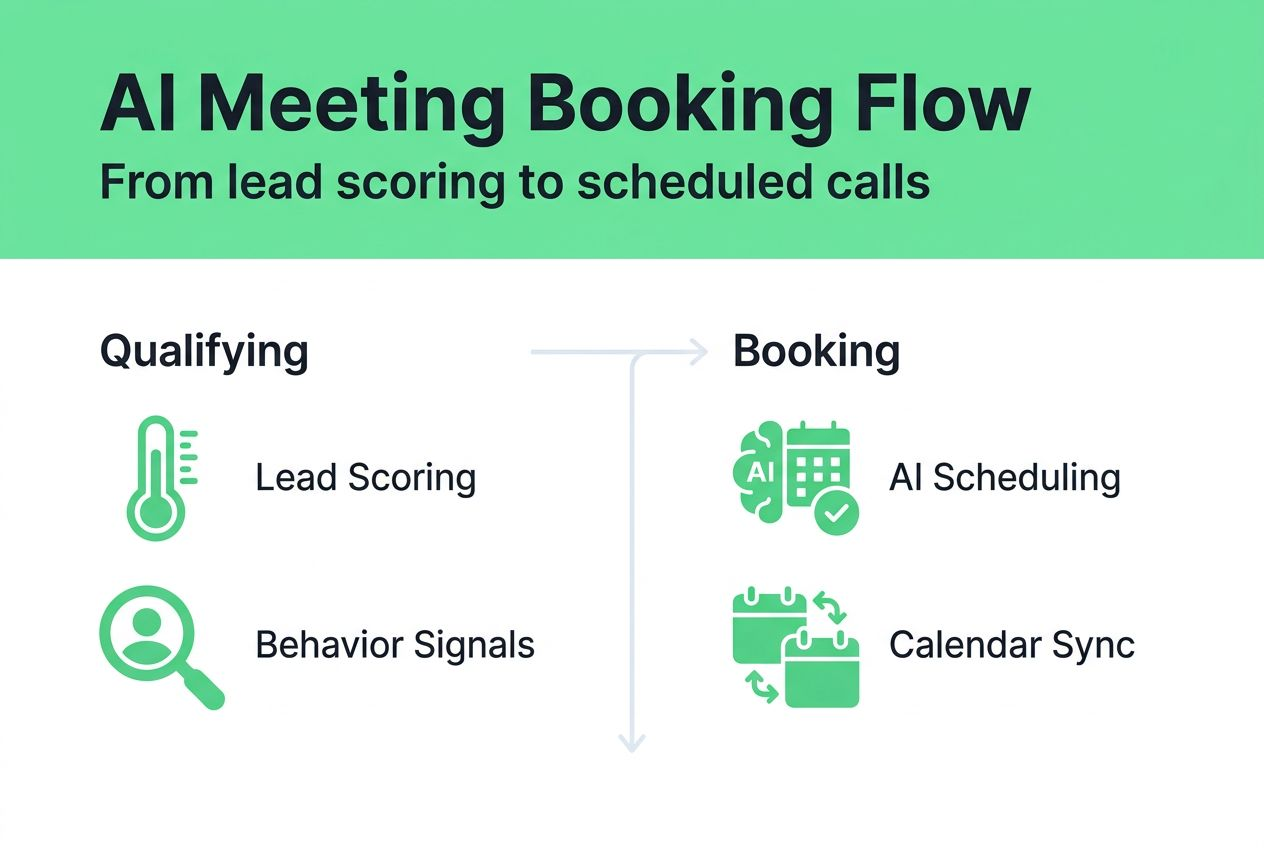
The solution lies in intelligent automation that handles scheduling logistics while maintaining personalization. AI tools can manage outreach sequences, sync calendars in real time, and qualify prospects based on engagement signals. This approach eliminates administrative drag and accelerates your path from first contact to booked meeting.
Preparing for automated meeting booking: tools and prerequisites
Successful automation starts with selecting the right technology stack. Your CRM must integrate seamlessly with booking tools to track every prospect interaction. Calendar syncing needs to work reliably across platforms so prospects see accurate availability. Email automation should support personalized sequences at scale without manual intervention.
Instantly has an average rating of 4.8 out of 5 stars across 3,830 G2 reviews, making it a top choice for automated outreach. The platform handles email sequences, domain warming, and inbox rotation to maintain deliverability. Look for tools offering similar capabilities with proven track records in B2B environments.
| Tool Category | Required Features | Why It Matters |
|---|---|---|
| CRM Platform | Contact management, activity tracking, integration APIs | Centralizes prospect data and meeting history for follow-up |
| Email Automation | Sequence building, personalization tokens, analytics | Enables scaled outreach without manual sending |
| Calendar Integration | Real-time sync, timezone handling, buffer management | Prevents double bookings and shows accurate availability |
| Lead Scoring | Behavioral triggers, engagement tracking, qualification rules | Identifies which prospects warrant immediate meeting requests |
Define your ideal customer profile before launching campaigns. Document the specific characteristics, pain points, and buying signals that indicate a qualified prospect. This clarity ensures your automation targets the right audience and personalizes messages effectively. Vague targeting wastes budget on unqualified leads who book meetings but never convert.
Configure your Nexus CRM personal assistant to capture prospect interactions across channels. Set up tracking for email opens, link clicks, and response patterns. These engagement signals help your AI tools prioritize follow-up and optimize scheduling requests for maximum acceptance rates.

Pro Tip: Start with a small, highly qualified prospect list to test your automation workflows. Perfect your messaging and booking process with 50-100 contacts before scaling to larger volumes. This approach identifies issues early and prevents wasting opportunities on poorly configured campaigns.
Prepare your team for the transition to automated booking. Train representatives on reviewing AI-qualified leads and conducting meetings with properly warmed prospects. Update your sales playbook to reflect new workflows where automation handles scheduling and humans focus on outbound sales team unlock conversations that build relationships and close deals.
Step-by-step tutorial: executing AI-powered B2B meeting booking
Begin by building your target prospect list with precision. Upload contacts to your CRM and segment by industry, company size, and buying signals. Enrich records with job titles, company information, and pain points relevant to your solution. Clean data ensures personalization tokens populate correctly in automated messages.
Create your outreach sequence with 4-6 touchpoints spaced strategically:
- Initial value-driven message highlighting a specific prospect pain point
- Follow-up sharing a relevant case study or insight (3 days later)
- Direct meeting request with calendar link (4 days after second message)
- Final breakup email offering alternative resources (5 days after third message)
- Optional re-engagement message after 30 days for non-responders
Personalize each message beyond basic name and company tokens. Reference specific challenges their industry faces or recent company news. AI tools can generate variations that maintain your brand voice while adapting to prospect characteristics. Test different value propositions and calls to action to identify what resonates.
Sync your calendar to show real-time availability. Configure buffer times between meetings to prevent burnout and allow prep time. Set business hours that account for prospect time zones so they see convenient booking slots. Enable automated confirmations and reminders to reduce no-shows.
Implement lead scoring to prioritize prospects showing high engagement. Assign points for email opens, link clicks, and reply behavior. When prospects reach your threshold score, trigger an immediate booking invitation. The LILT case study indicates a 35% increase in qualified meetings generated with AI sales tools that score and prioritize leads intelligently.
| Campaign Stage | Key Metrics | Optimization Action |
|---|---|---|
| Outreach Launch | Open rate, click rate | Test subject lines and preview text |
| Engagement Phase | Reply rate, positive responses | Refine value proposition and timing |
| Booking Request | Meeting acceptance rate | Adjust scheduling friction and availability |
| Meeting Completion | Show-up rate, qualification | Improve confirmation process and screening |
Monitor your campaign dashboard daily during the first week. Track which messages generate responses and which fall flat. Pause underperforming sequences and double down on winning variations. Your outbound sales team unlock depends on rapid iteration based on real performance data.
Use AI to analyze reply sentiment and automatically categorize responses. Positive replies trigger booking links while questions route to human follow-up. Negative responses or unsubscribes update your CRM to prevent future contact. This intelligent routing ensures prospects receive appropriate next steps without manual triage.
Pro Tip: Schedule your automated sequences to send during peak engagement windows. Tuesday through Thursday between 8-10 AM in the prospect's time zone typically generates highest open and response rates. Avoid Monday mornings and Friday afternoons when attention is divided.
Integrate your Nexus CRM personal assistant to log every interaction automatically. This creates a complete prospect timeline your sales team can review before booked meetings. Context about previous touchpoints helps representatives personalize conversations and address specific concerns prospects raised during automated outreach.
Troubleshooting common pitfalls and optimizing meeting booking results
Generic messaging kills engagement rates faster than any technical issue. Prospects receive dozens of automated emails daily and instantly recognize templates lacking personalization. Move beyond basic name insertion to reference specific company details, recent achievements, or industry challenges. Your automation should feel like a 1-to-1 conversation, not a mass blast.
Calendar availability problems create unnecessary friction. Outdated availability wastes prospect time and damages trust when they select slots you cannot honor. Enable two-way calendar sync so cancellations and new commitments update availability instantly. Set realistic buffer times rather than back-to-back bookings that leave no room for overruns.
Test every element of your booking funnel systematically:
- Subject lines should create curiosity without clickbait
- Email body must deliver promised value quickly
- Call-to-action buttons need clear, benefit-focused text
- Calendar page should load fast and display cleanly on mobile
- Confirmation emails must include all meeting details and preparation materials
Data quality degrades over time as prospects change roles, companies, or contact information. Schedule quarterly list cleaning to remove bounced emails, update job titles, and verify company details. Scrub unengaged contacts who never opened messages after multiple attempts. Focus your automation budget on prospects showing interest rather than continuously emailing dead addresses.
"The LILT case study shows a 56% cost reduction through the consolidation of legacy tools. Multiple disconnected systems create inefficiency and increase error rates."
Consolidate your tech stack to reduce complexity and cost. Running separate tools for email, CRM, calendar, and analytics creates data silos and integration headaches. Predictable B2B client acquisition systems unify these functions in one platform, eliminating manual data transfers and reducing subscription expenses.
Monitor your no-show rate closely. High cancellation or no-show rates indicate qualification problems earlier in your funnel. Tighten lead scoring criteria to ensure only genuinely interested prospects receive booking invitations. Add confirmation steps like calendar holds or prep questions that filter out tire-kickers.
Response time matters enormously after prospects book meetings. Automated confirmation should send instantly with clear next steps. Human follow-up within 2 hours reinforces the meeting's importance and allows you to gather additional context. Slow responses signal disorganization and reduce show-up rates.
Track conversion metrics beyond just booked meetings. Measure how many booked meetings actually occur, how many result in qualified opportunities, and ultimately how many close into revenue. This full-funnel view reveals whether your automation attracts the right prospects or just fills calendars with unqualified conversations.
Explore proven B2B client acquisition systems with Sales Company
You now understand how to implement automated meeting booking that generates qualified leads consistently. The next step is accessing technology built specifically for this workflow. Sales Company offers AI-powered platforms that handle everything from initial outreach through pipeline management.
Our predictable B2B client acquisition systems combine autonomous AI teams with integrated CRM functionality. You get outreach automation, lead qualification, and meeting scheduling in one workspace designed for agencies and service providers scaling client acquisition.
The Nexus CRM personal assistant tracks every prospect interaction and surfaces insights that improve booking rates. Your team sees which messages drive meetings and can refine approaches based on real performance data. Plus, outbound sales team unlock strategies from our experts help you maximize results from automated workflows.
Frequently asked questions
What is B2B meeting booking automation?
B2B meeting booking automation uses software to handle scheduling sales conversations without manual coordination. The technology manages outreach sequences, syncs calendars, and books meetings based on prospect engagement signals. This saves hours of administrative time and improves lead quality by ensuring only interested prospects reach your calendar.
How do AI tools improve meeting booking efficiency?
AI identifies qualified prospects by analyzing behavioral signals like email opens, link clicks, and reply patterns. It personalizes outreach at scale and optimizes scheduling availability based on acceptance rates. This intelligence leads to higher booking rates while reducing the administrative workload that typically consumes sales team capacity.
What common mistakes should I avoid in automated meeting booking?
Avoid generic messages that fail to personalize beyond basic name tokens. Keep your calendar availability updated in real time to prevent double bookings that frustrate prospects. Regularly clean contact lists to maintain data accuracy and remove unengaged prospects. Test different subject lines, calls to action, and message timing to identify what drives best results with your specific audience.
How long does it take to see results from automated booking?
Most teams see initial meetings booked within 7-10 days of launching properly configured campaigns. Full optimization takes 30-60 days as you gather performance data and refine targeting, messaging, and timing. The key is starting with a small, highly qualified prospect list to perfect your approach before scaling volume.